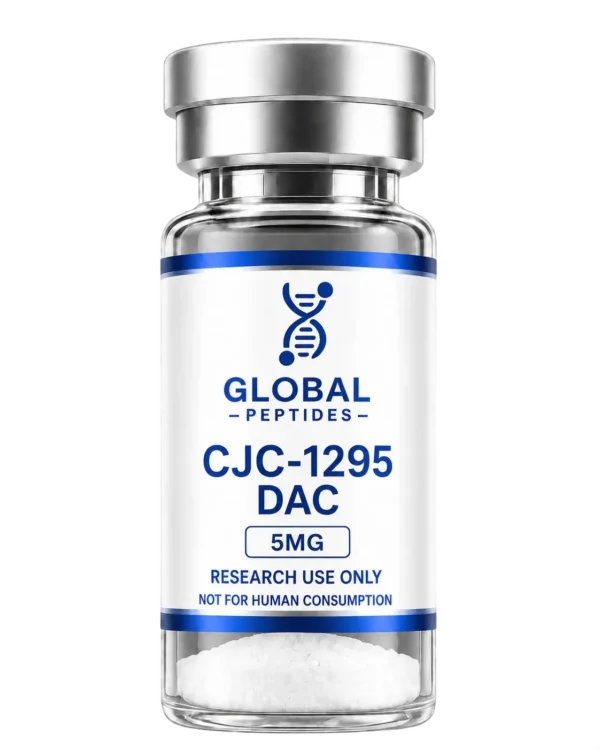
CJC-1295 DAC
$89.94
Select options
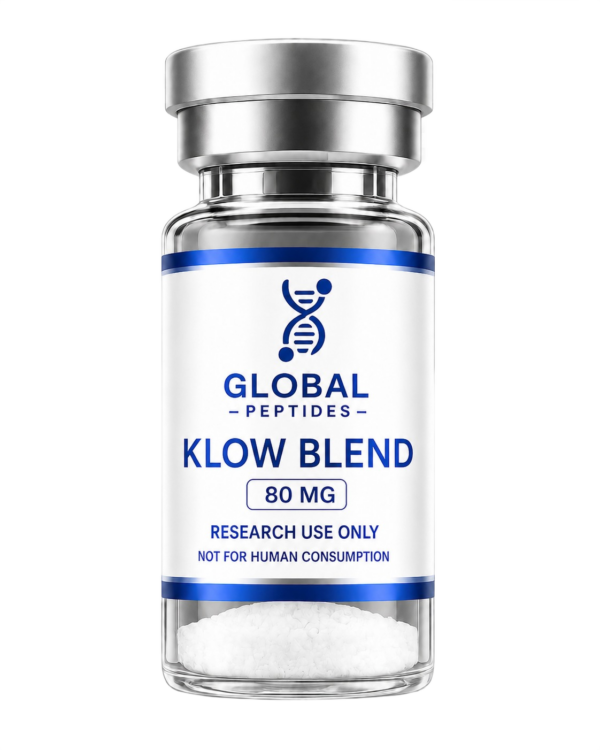
Global Peptides supplies Klow Blend material to laboratories across Australia, combining four individually studied research peptides within a single lyophilised preparation for laboratory investigation of tissue repair, inflammatory signalling and connective tissue related research.
This preparation is also referenced in supplier literature as the BPC 157 TB 500 KPV GHK Cu Klow Blend, sometimes known elsewhere as the Wolverine Stack, reflecting its four component compounds: BPC-157, a pentadecapeptide derived from a gastric protective protein; TB-500, a synthetic fragment linked to Thymosin Beta-4; GHK-Cu, a copper binding tripeptide; and KPV, a tripeptide derived from the C-terminal sequence of alpha-melanocyte-stimulating hormone. No controlled study has evaluated these four compounds together as a combined formulation, so this preparation does not carry an established joint research profile, and each compound is referenced only through its own separate research record.
Each batch is produced under controlled manufacturing conditions and undergoes independent laboratory verification, supporting consistent, repeatable results across analytical testing. A Certificate of Analysis is available on request for every order.
Many researchers ask what Klow Peptide is and how its four component compounds relate to one another within this formulation.
Klow Blend brings together BPC-157, TB-500, GHK-Cu and KPV in a single vial for comparative laboratory research. KPV in particular is studied for its relevance to inflammatory signalling pathways and immune related research, distinct from the tissue repair and copper binding profiles associated with the other three compounds.
Because the four compounds have not been evaluated together in any controlled study, researchers typically assess each on its own terms rather than assuming a validated combined effect.
Within controlled laboratory settings, research connected to this combination commonly touches on areas such as:
These points reflect laboratory observation of each compound's separate literature only and are not intended as claims about therapeutic outcomes.
Laboratories examining regenerative biology and inflammatory signalling frequently reference this preparation given its combination of four individually studied compounds, each contributing a distinct research profile to comparative laboratory work. This formulation is sometimes described as a klow peptide stack or klow stack peptide among researchers comparing supplier catalogues.
Researchers comparing options across related compounds can explore the full peptides category for additional research materials.
Laboratories searching for klow peptide Australia can access verified material through Global Peptides, supported by transparent documentation and confirmed purity levels for each component.
This klow peptide blend is intended strictly for laboratory research into tissue repair and inflammatory signalling pathways, with each compound studied independently prior to inclusion in the formulation.
These klow blend peptides are supplied strictly for laboratory and scientific research purposes only, with consistent quality control maintained at every stage of supply.
Researchers who buy Klow Blend for laboratory projects gain access to batch specific Certificates of Analysis, HPLC and LC-MS verification, and secure ordering processes designed for research institutions.
Global Peptides makes it straightforward to source research grade material with confidence, and researchers can browse our catalog to view other research compounds available alongside this formulation.
This compound is supplied strictly for laboratory and scientific research purposes and is not approved for consumption, therapeutic, cosmetic or aesthetic use outside of a qualified research setting. It is not intended for use in humans or animals in any form, and no dosing, administration or usage guidance is provided. None of the four component compounds have an established combined research profile, and all information presented here is drawn from each compound's separate, controlled, non-clinical laboratory research. It does not represent a claim about this product.
$89.94
Select options
Price range: $79.94 through $115.95
Select options
$89.95
Select options